COMMERCIAL PHOTOGRAPHY, MADE SIMPLE
Good photos don’t just look nice. They help your business grow.
If you’ve ever wondered whether professional photography is actually worth it — this page is for you. We’ll walk you through what you get, why it matters, and how to get the most out of every shoot.
THE BUSINESS CASE
ROI of professional product photography
Amateur or stock photography signals shortcuts. Professional imagery signals confidence. The gap between the two isn’t aesthetic — it’s commercial. Buyers make purchase decisions in under three seconds of visual contact, and poor imagery is the single highest-cited reason for cart abandonment after price.
94%
75%
30%
3x
Think about it this way: if better photos help even 1 in 100 more visitors decide to buy, that adds up to real money — money that pays back the shoot cost quickly, then keeps working for you every day after.
WHY IT MATTERS NOW
AI-optimised for how buyers actually search
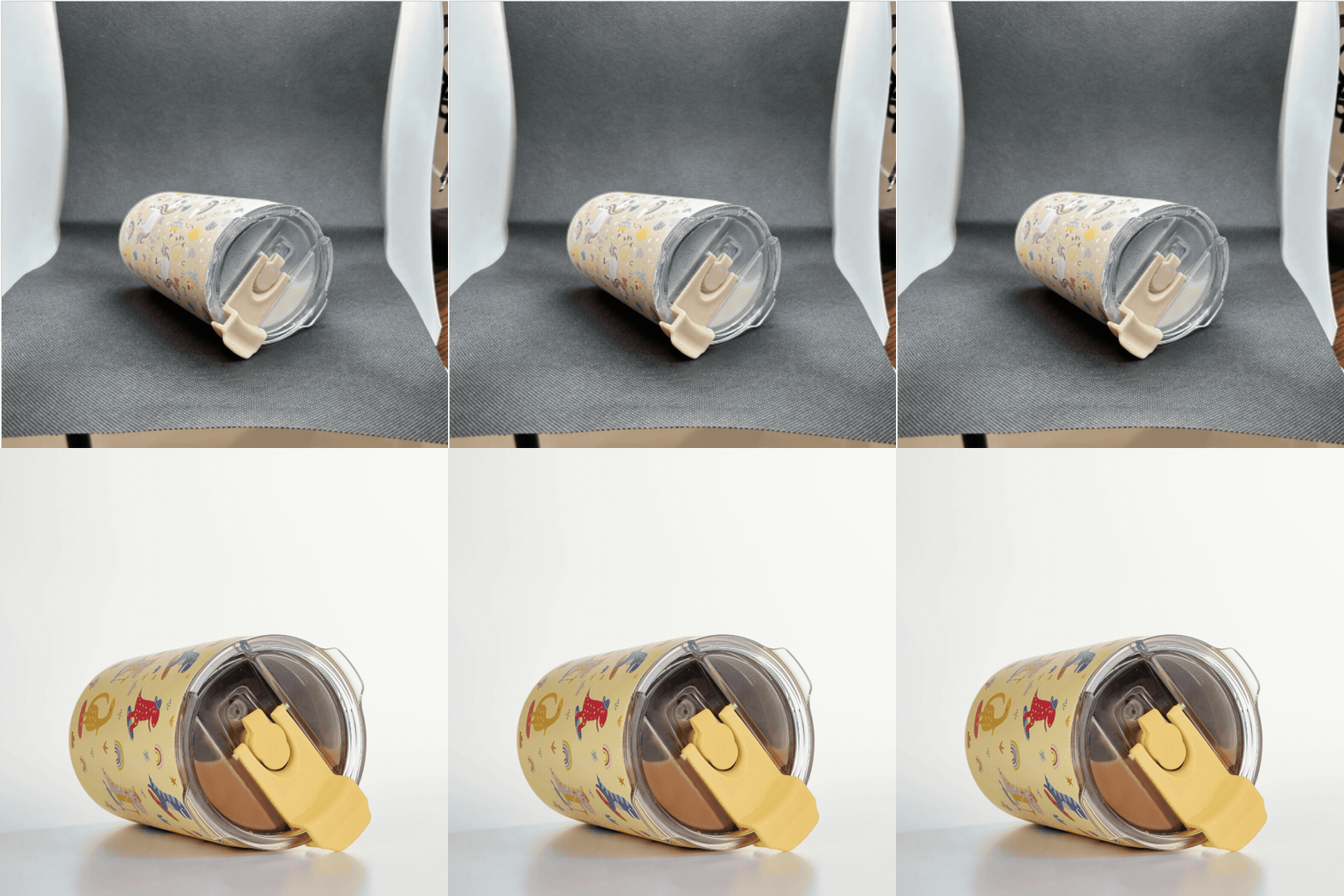
Search behaviour is shifting. AI-powered assistants, Google’s AI Overviews, and visual search engines now surface product recommendations based not just on text but on the quality, relevance, and completeness of your visual content. Products with comprehensive image libraries — clean angles, lifestyle context, scale references, and detail shots — are indexed more richly and recommended more confidently.
✦ Visual search indexing
WHAT YOU RECEIVE
Your photo library: a long-term commercial asset
A single shoot produces deliverables that operate across your entire business for years. Unlike ad spend, which stops working the moment the budget runs out, a well-built photo library compounds in value over time — repurposed, relicensed, and reused across channels your business hasn’t yet entered.
When you think about the cost per image — across all the places those photos end up — professional photography is usually one of the best-value investments a product business can make.
The two types of shots explained
Clean shots vs mood shots — what’s the difference and do you need both?
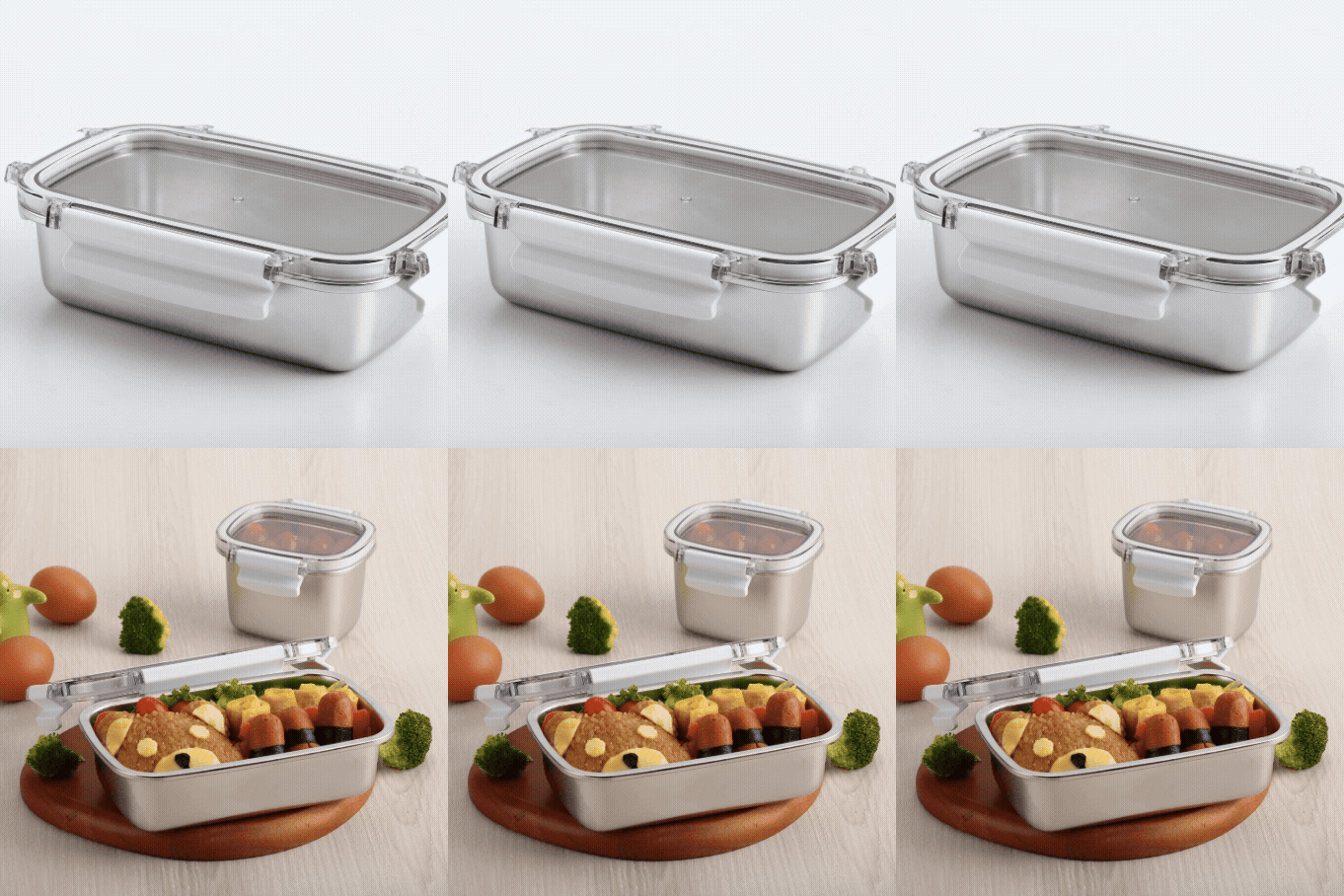
This is one of the most common questions we get, and it’s a great one. These two types of photos do very different jobs — and knowing which to use where can make a big difference to how well your imagery actually performs.
Clean shot
Shows the product clearly
Plain background, perfect lighting. No distractions. Just your product, looking its absolute best.
→ Product listings & marketplaces
→ Spec pages and comparison grids
→ Catalogue and trade sheets
→ App thumbnails and icons
→ Packaging and labels
→ Setting accurate expectations (reduces returns)
Mood shot
Shows the feeling it creates
Styled, lit, and set in context. It helps people imagine the product in their life — and want it there.
→ Brand campaigns and hero banners
→ Social media content
→ Paid social ads
→ Press and editorial features
→ Email marketing headers
→ Gifting and Influencer collateral
If you’re just starting out and budget is tight, clean shots come first — they’re what marketplaces require and what drives conversions most directly. As your brand grows, mood shots become the tool that differentiates you from competitors selling similar products.
How a shoot works
What to expect when you work with us
We try to make the whole process as easy as possible — especially if this is your first professional shoot. Here’s how it typically goes:
Step 01
We plan together
Step 02
You send your products
Step 03
We shoot and edit
Step 04
You get your library
Good to know
Questions we hear a lot
I’m a small business — is this for me?
How many photos do I need per product?
Can I use the same photos everywhere?
Design software
AI tools
Apps & Platform
Print & Packaging
Standard delivery is in JPG format, which covers the vast majority of digital and print use cases. Full commercial usage rights are included across all files.
What’s a flat lay? Is it the same as a clean shot?
For flat lays, the sweet spot is products where the top-down view actually reveals something useful — think festive hampers, gift sets, or packaging collections laid out together. A beautiful overhead shot of a Chinese New Year gift box arrangement, for example, shows the full set at a glance and works brilliantly for catalogue pages and social content. It’s a group presentation format, not a food format.
For flat lays, the sweet spot is products where the top-down view actually reveals something useful — think of festive gift sets, or packaging collections laid out together. A beautiful overhead shot of a Chinese New Year gift box arrangement, for example, shows the full set at a glance and works brilliantly for catalogue pages and social content. It’s a group presentation format, not a food format.
How do I know if I need a Clean shoot or a Mood shoot?
What goes into a mood shoot — and how far can it go?
Studio styled
On location
Full environment
The Airbnb approach in particular has become increasingly popular with brands that want genuinely complete storytelling. Instead of one styled corner, you get a whole environment — a living room, kitchen, bedroom, outdoor terrace — all with interior design that already aligns with the brand’s aesthetic. Your product doesn’t just appear in a photo. It lives somewhere.
This approach gives you an entire content library from a single booking — hero banners, social carousels, email headers, campaign visuals — all feeling like they came from the same coherent world, because they did. Brands that invest in this level of shoot typically have enough content to run consistent campaigns for six months to a year without reshooting.
How does professional photography affect my ad performance?
READY WHEN YOU ARE
Let's make your products look like they belong on a shelf people stop at.
Tell us a little about your products and what you’re working on — we’ll come back with ideas, not a hard sell.
⊕ No commitment required
⊕ Reply within 1 business day
⊕ Custom quote for every project